Two Amazing Girls: Anne Frank and Natalie Flaherty

A little over a month ago, I received an email asking if I had made Anne Frank dolls ( I have made several, including one for the museum in Europe).  Before responding, I decided to Google Natalie Flaherty, the person asking. I wasn’t expecting the search to tell me much, maybe just whether this was a child or an adult. However, I learned a lot. First, she is a child, an amazing child, and she was deeply connected to the story of Anne Frank.
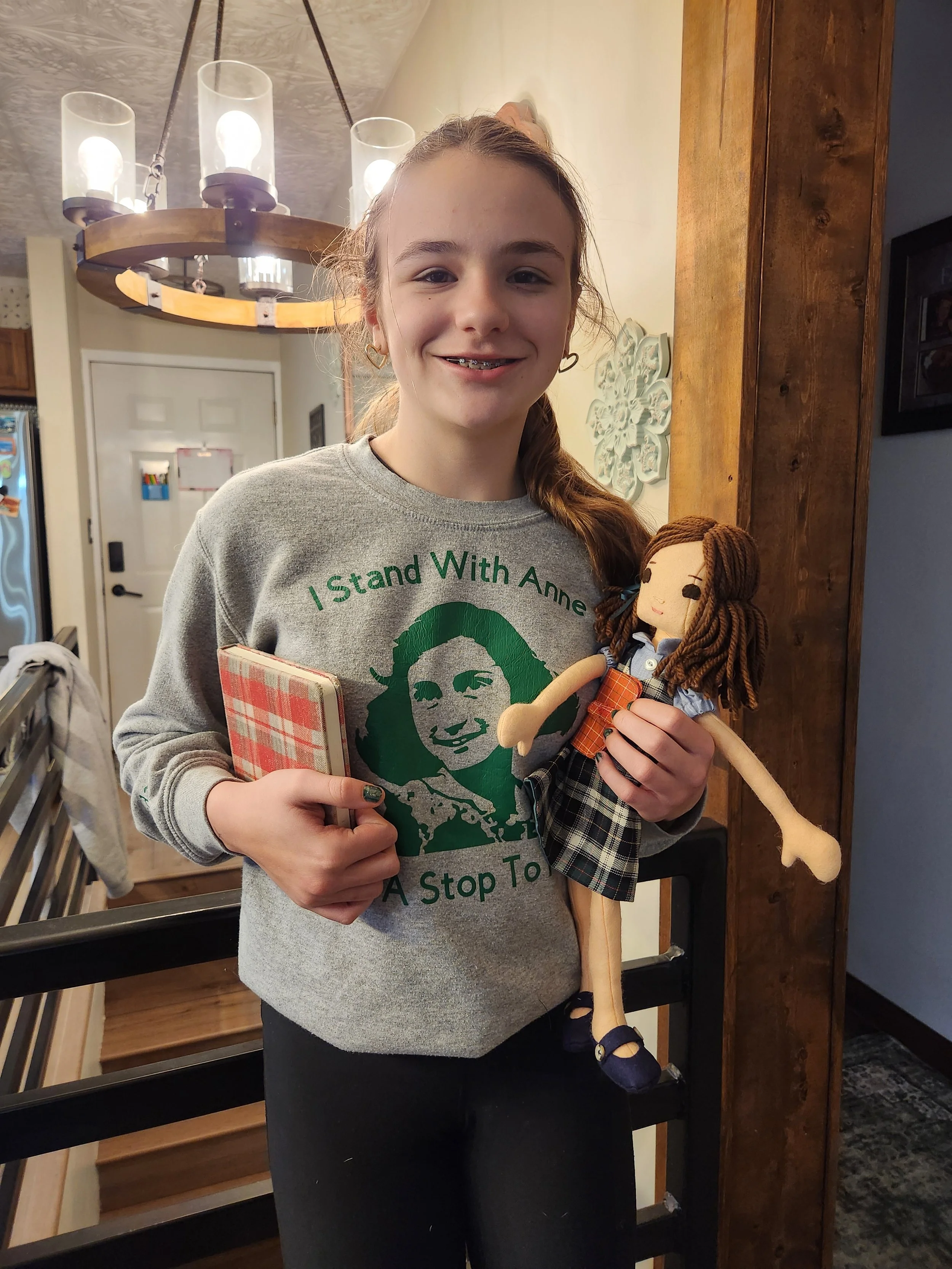
Natalie is a child, a middle schooler in a small town in Minnesota. Through emails and articles, I learned a lot more about Natalie—all very impressive. When Natalie was eight, she learned about Anne Frank while her Mom was watching a documentary about her. She learned that Anne had a diary and begged her mother for a copy. Her mother waited until Natalie was old enough to comprehend the Holocaust. Natalie believed in the goodness of people and that kids also have the power to make change. She didn’t want Anne’s story to be forgotten or repeated, and she wanted others to learn from it too. She started to make posters and rubber bracelets that said “I stand with Anne, put a stop to hate.” She gave out over 100,00 bracelets (paid with her own money). The US Holocaust Memorial Museum, The Florida Holocaust Museum, The Anne Frank House, Anne Frank LA, and The Anne Frank Center, USA are giving the bracelets to patrons. 

Natalie has been asked to speak about Anne Frank at a tree-planting in Omaha, Nebraska, and other places in the Midwest. She feels grateful for the opportunity to meet Holocaust survivor Trudy Strobel. 

“She was notable in many ways, connecting me more to the victims of the holocaust and to her story. She was a beautiful person and actually gave me a Dutch Doll from the 50s. She had a doll that was taken from her during her time in the camps and dolls are very meaningful to her.”

“After the tree planting in Omaha, I realized I could have a piece of Anne near me forever if I really wanted to, and decided to fill out the applications to bring one of Anne’s historic trees to my small community. My request was granted, and we planted a small piece of Anne’s story right here in my hometown in May of 2025.”

Natalie continues to work with the Anne Frank Center and is pleased that they now offer “I stand with Anne” clothing. 

Last August Natalie traveled with her family to Amsterdam and went to the Anne Frank House. 

“It was so humbling and somber to feel so close to the person I have spent my life trying to appreciate. I sat in her room in the Annex for as long as I had time for and just listened to the quiet of the space and her lingering presence in my heart. It was such a special experience, and I hope one day I get to work or intern there. I know I am currently only 12, but I have hope that other young people feel inspired to also work to change the world.”

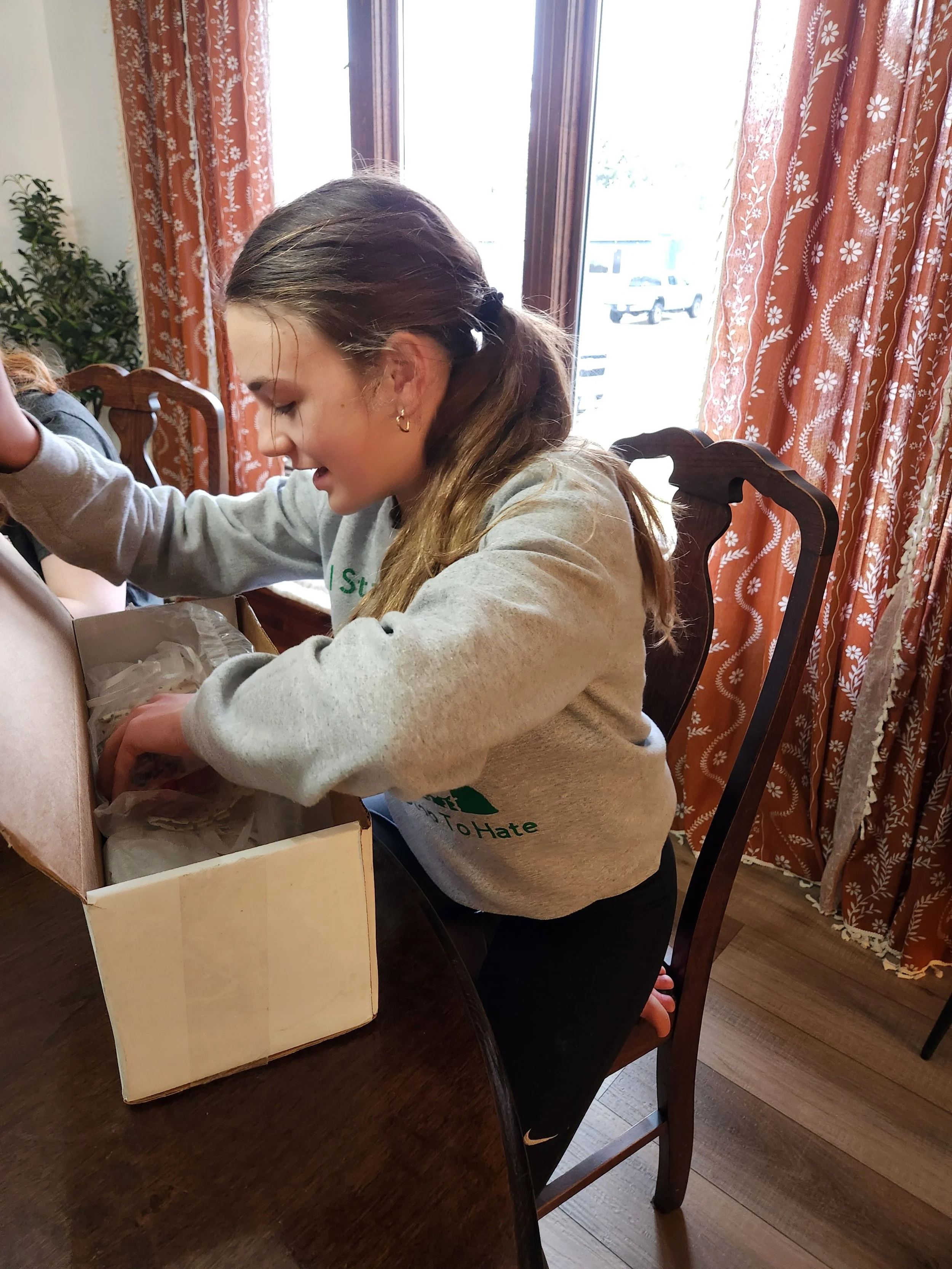
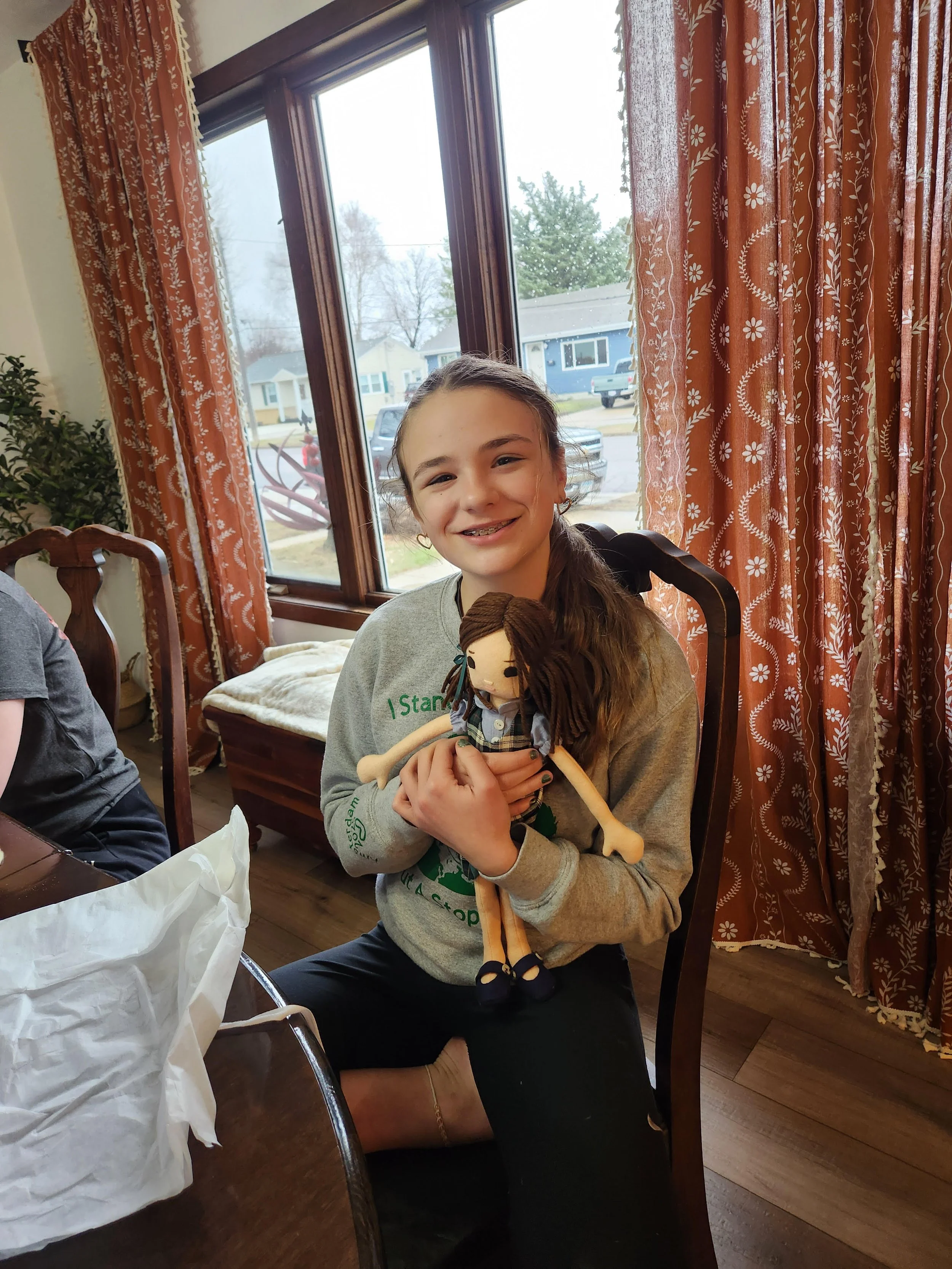
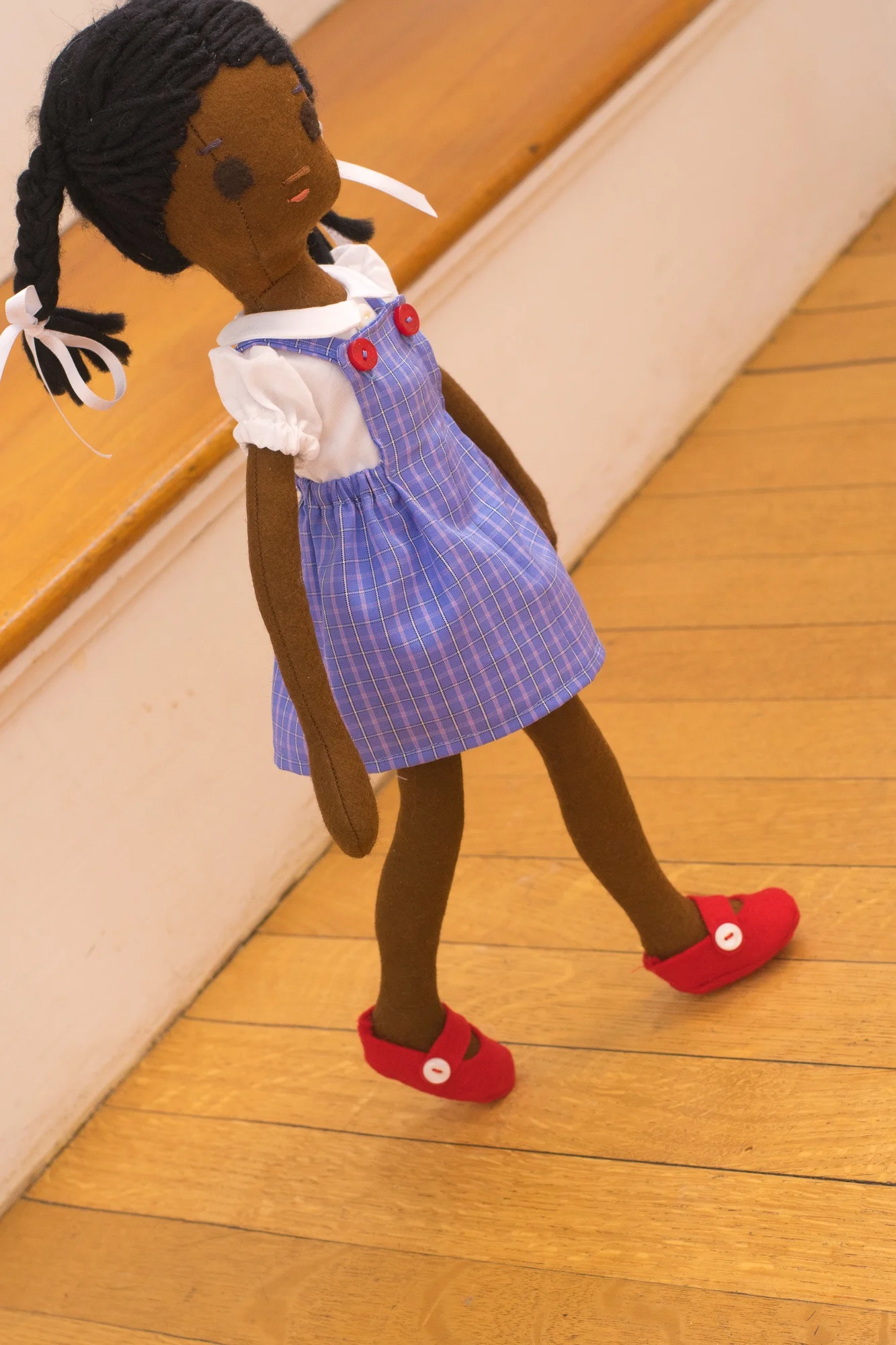
So, of course, I sent Natalie an Anne Frank doll.
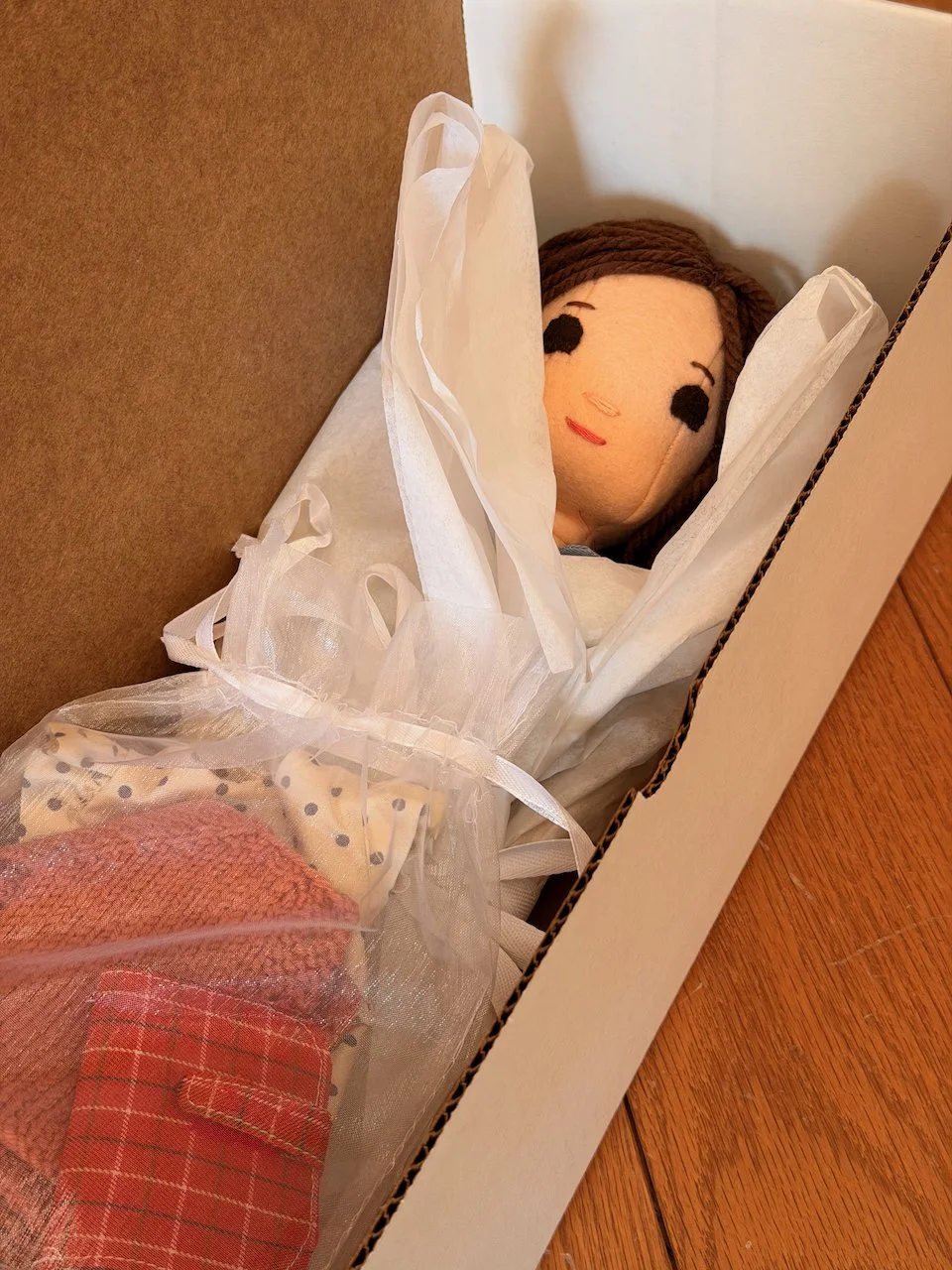

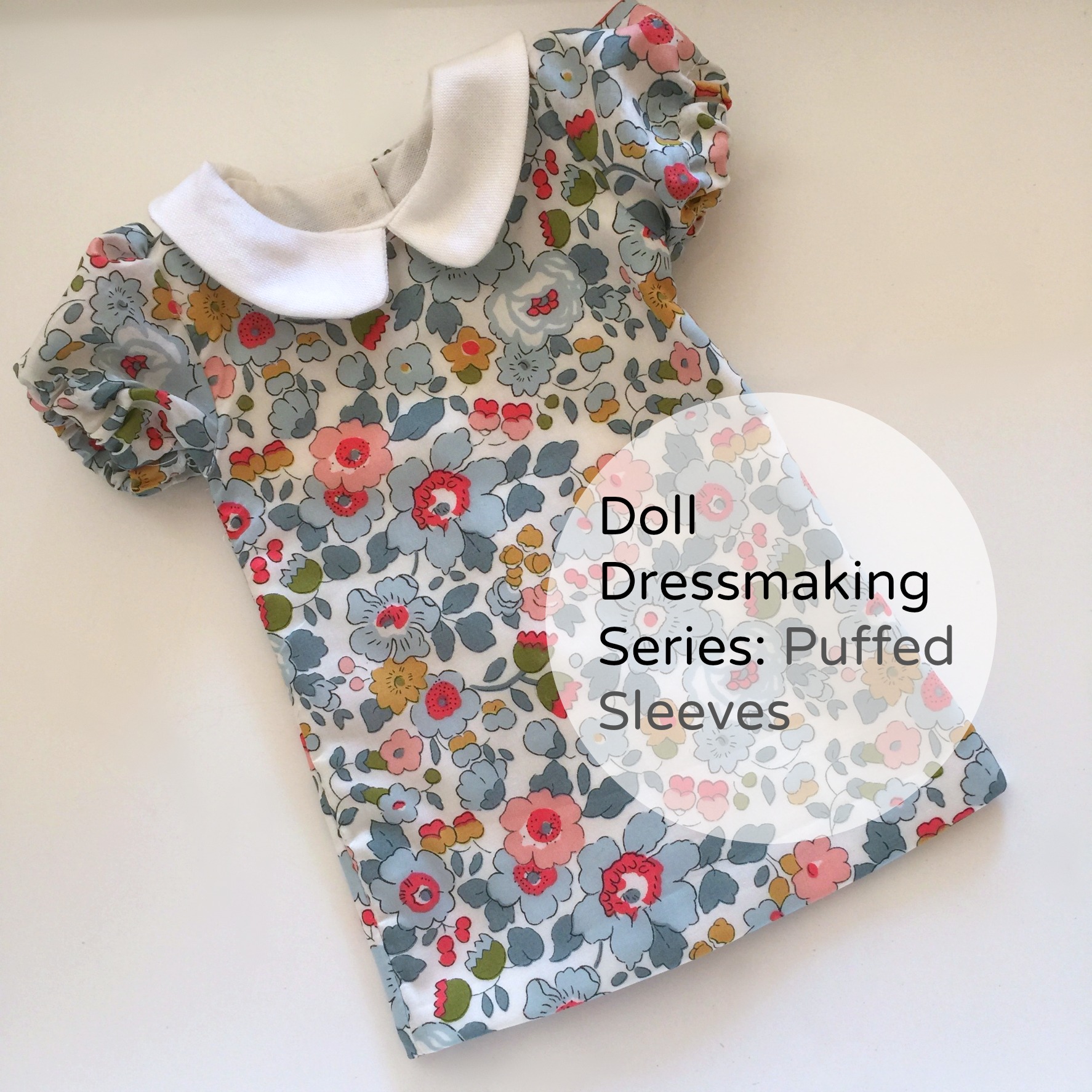
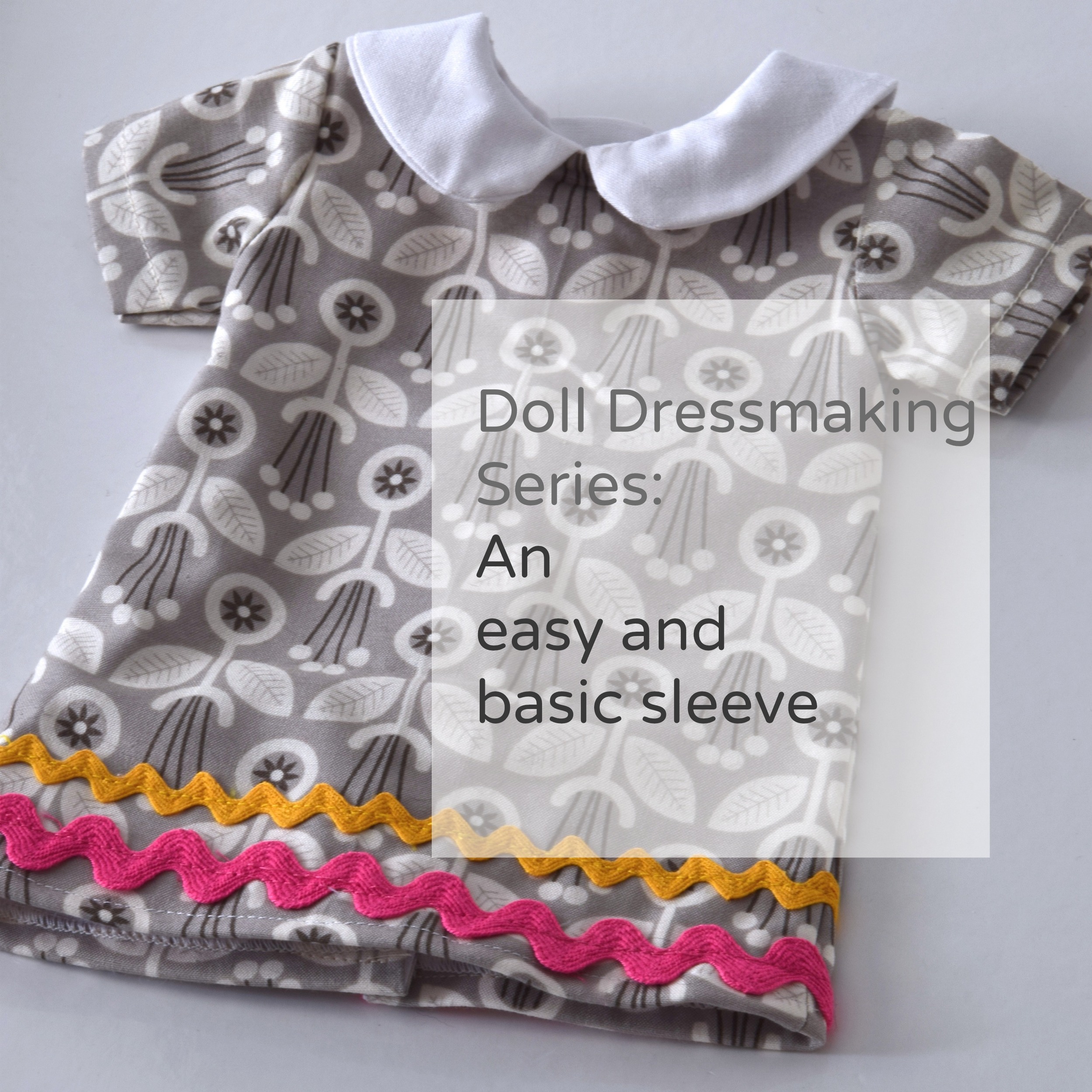
Doll Dressmaking: T-Shirts

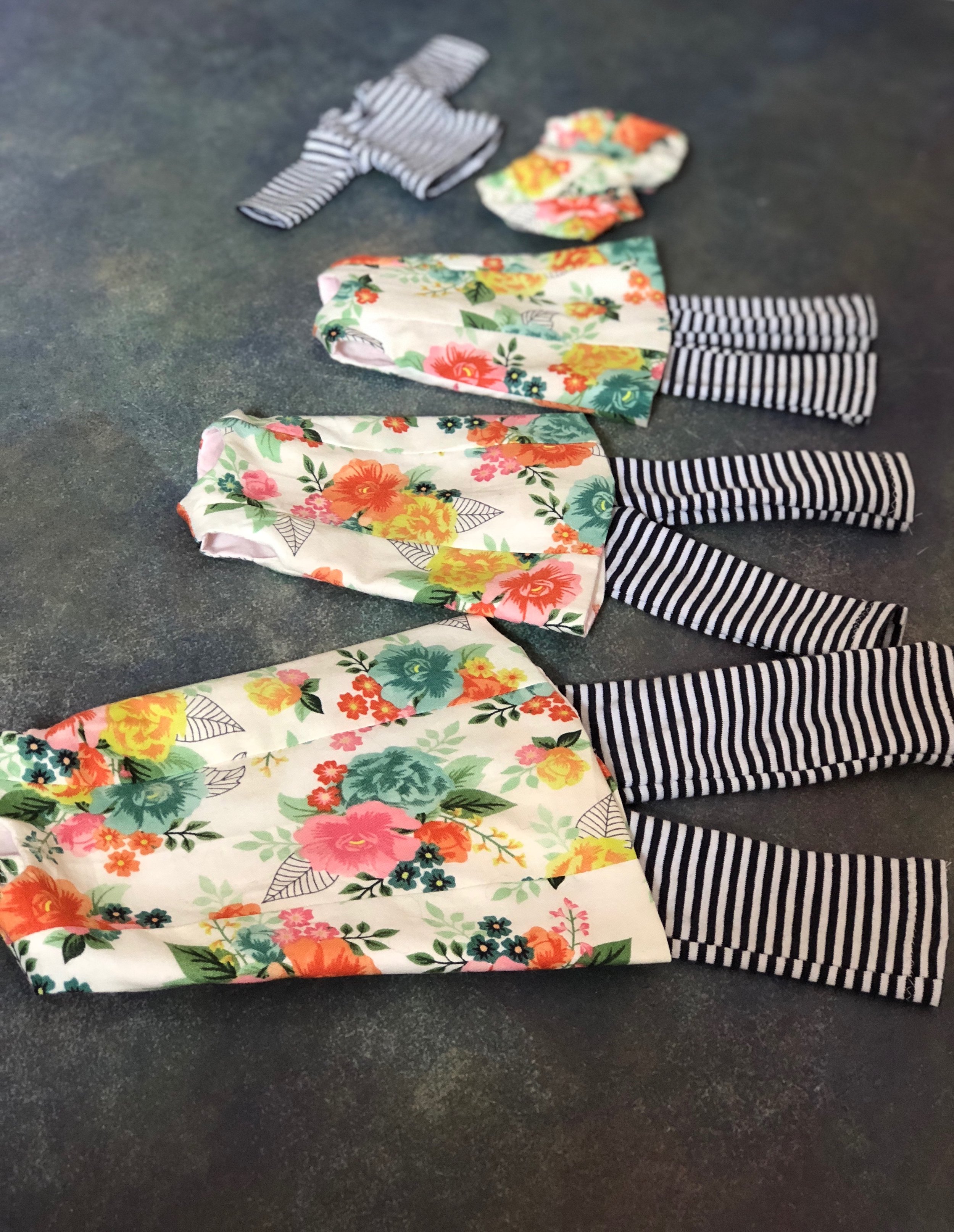
T-Shirts are easy and fun. I sew doll t-shirts and leggings with cotton jersey knit fabric. It’s a very forgiving fabric and very soft.

Although a ballpoint needle is recommended for sewing knit fabrics, I don’t think it is entirely necessary for doll clothes. Dolls don’t move and put stress on the seams.

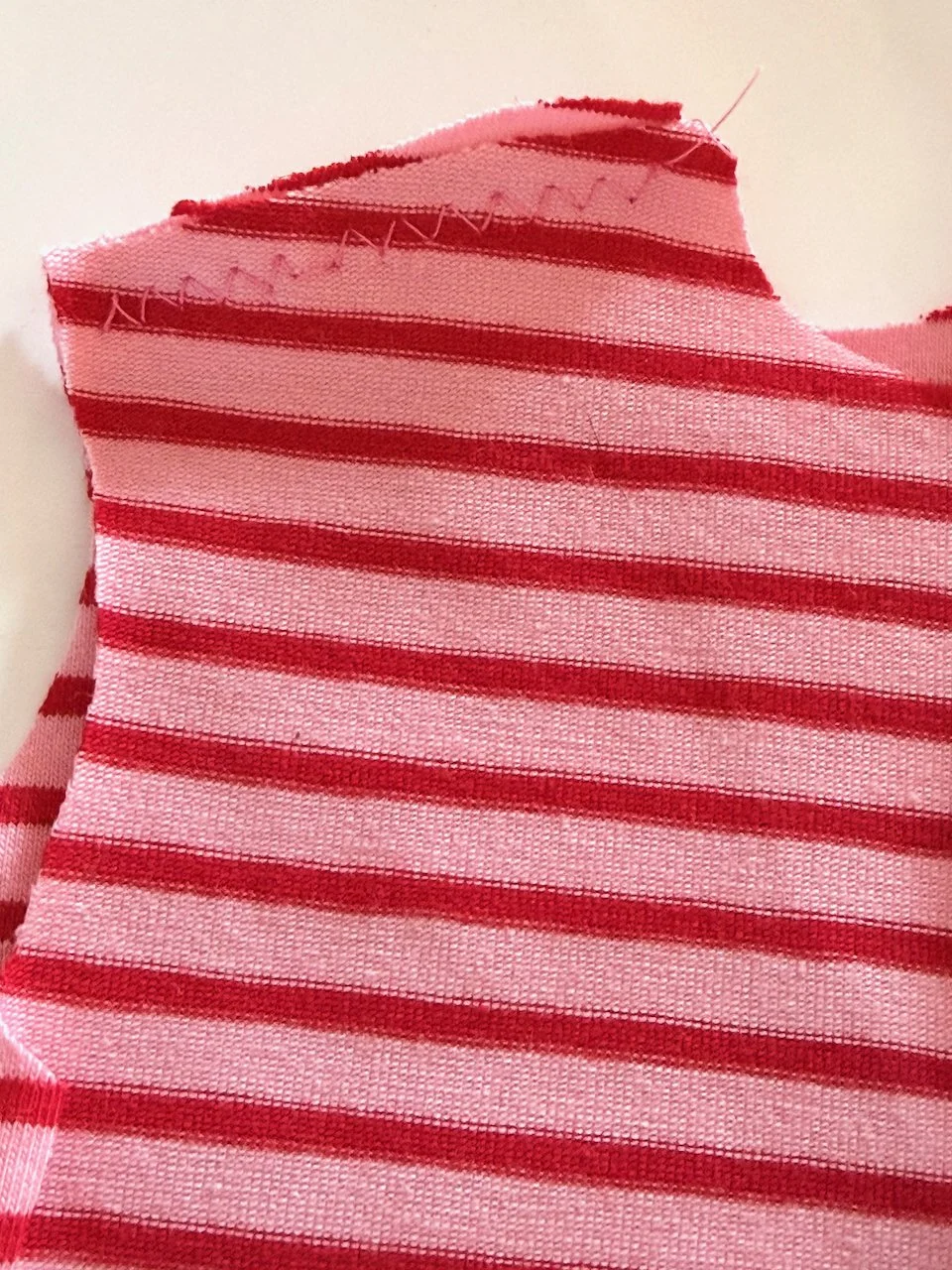
All seams are sewn with a zig-zag stitch. The standard zig-zag on the machine is too big. Adjust so it is a smaller, shallower zig.

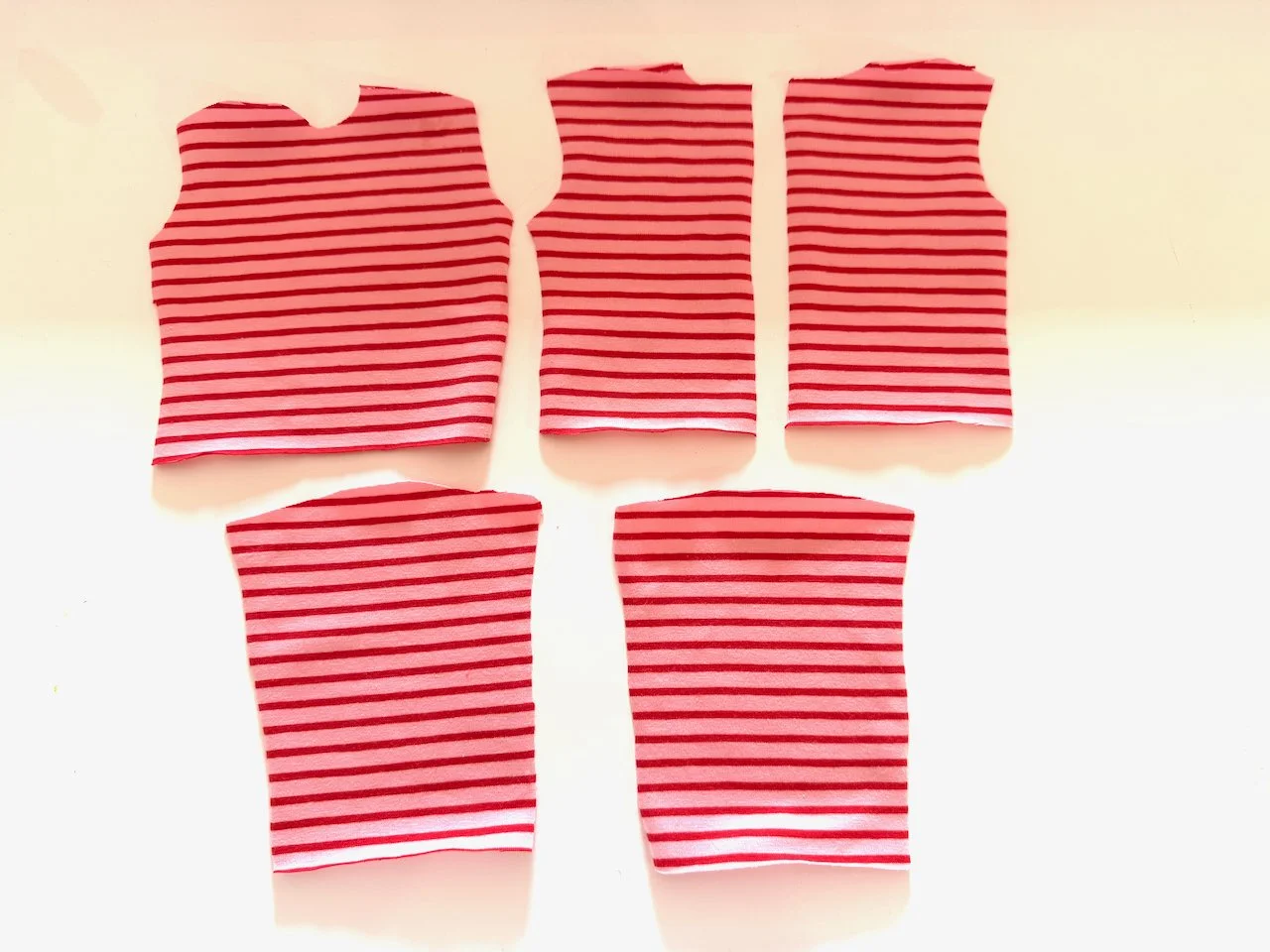
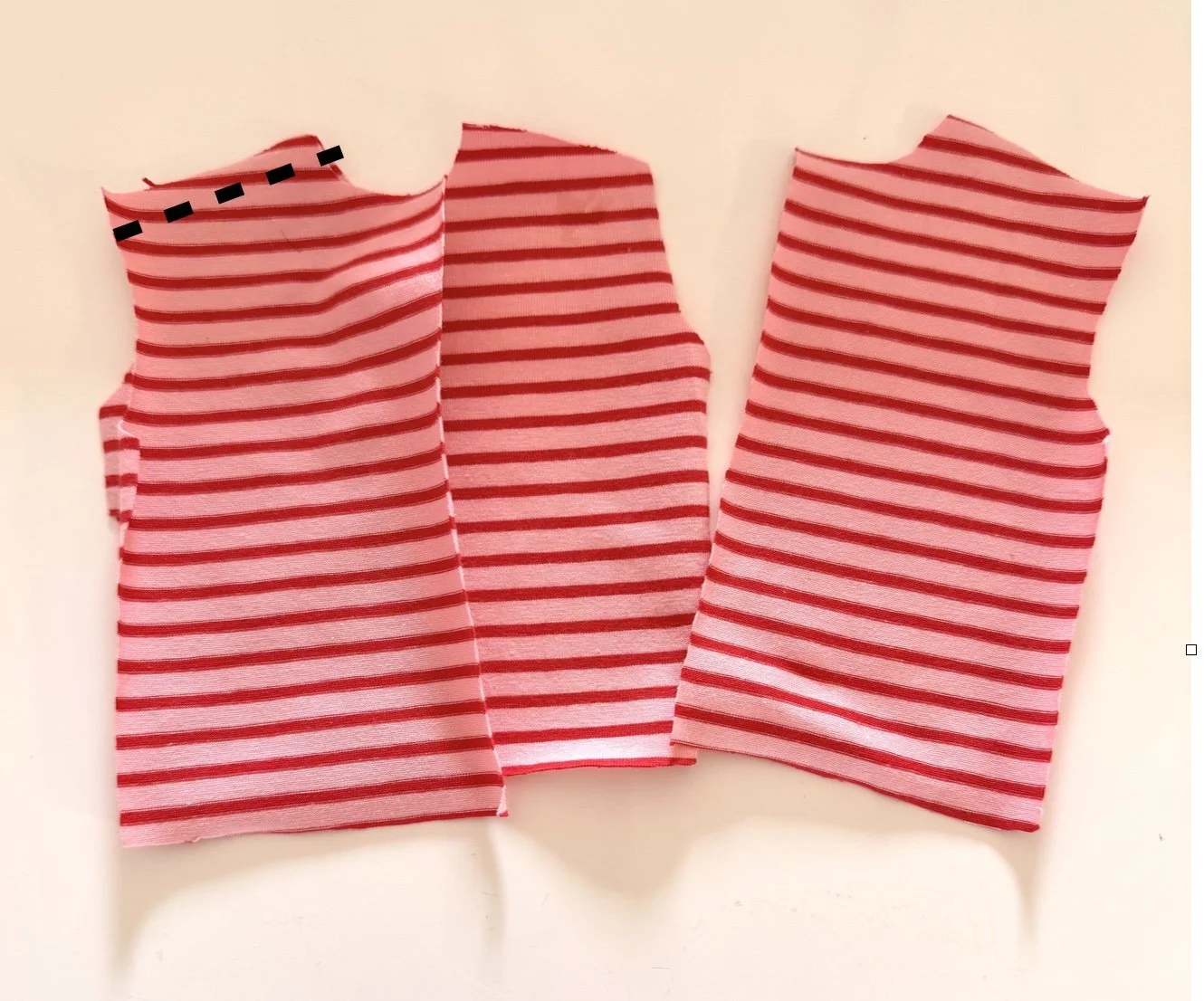
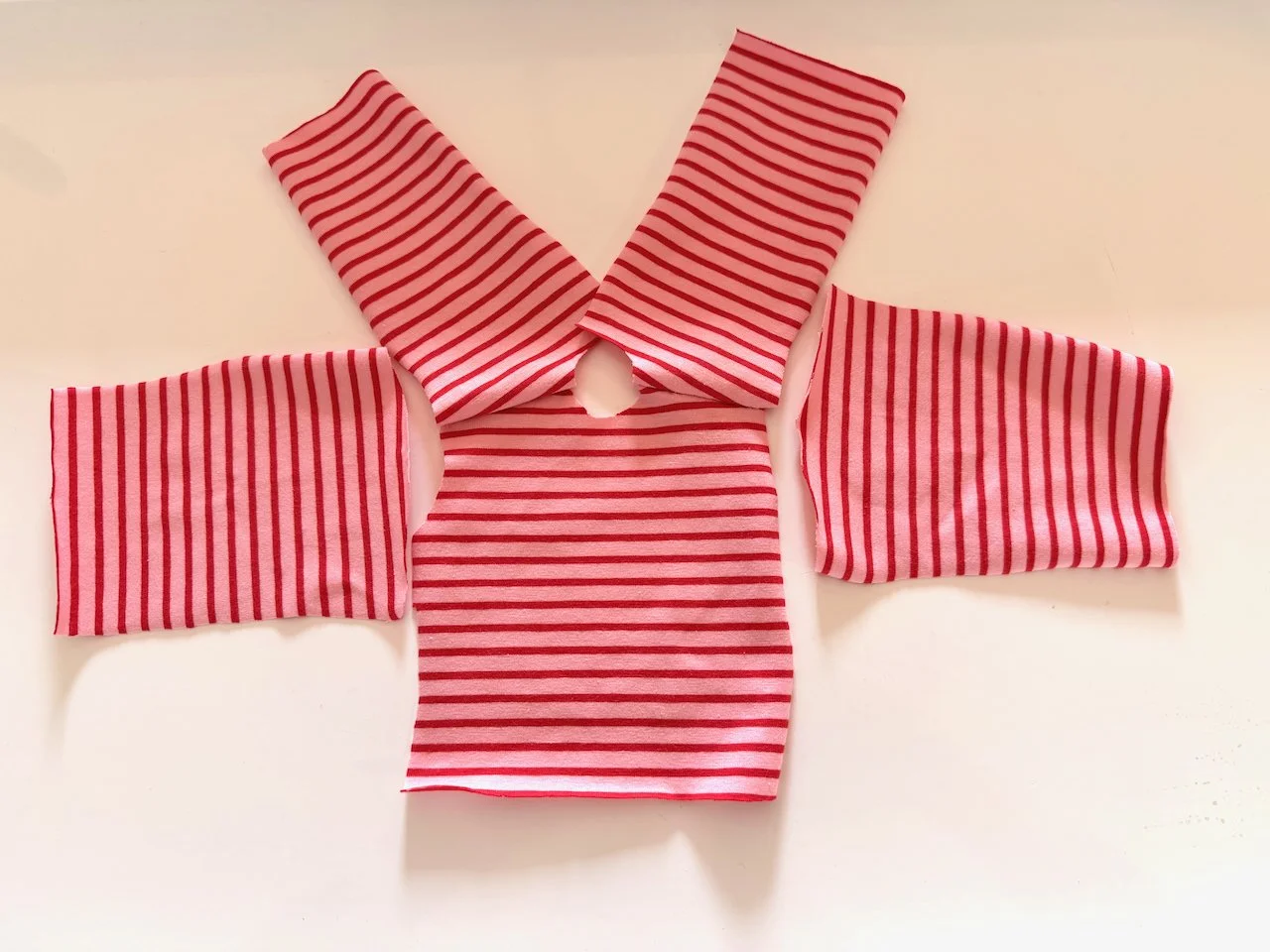
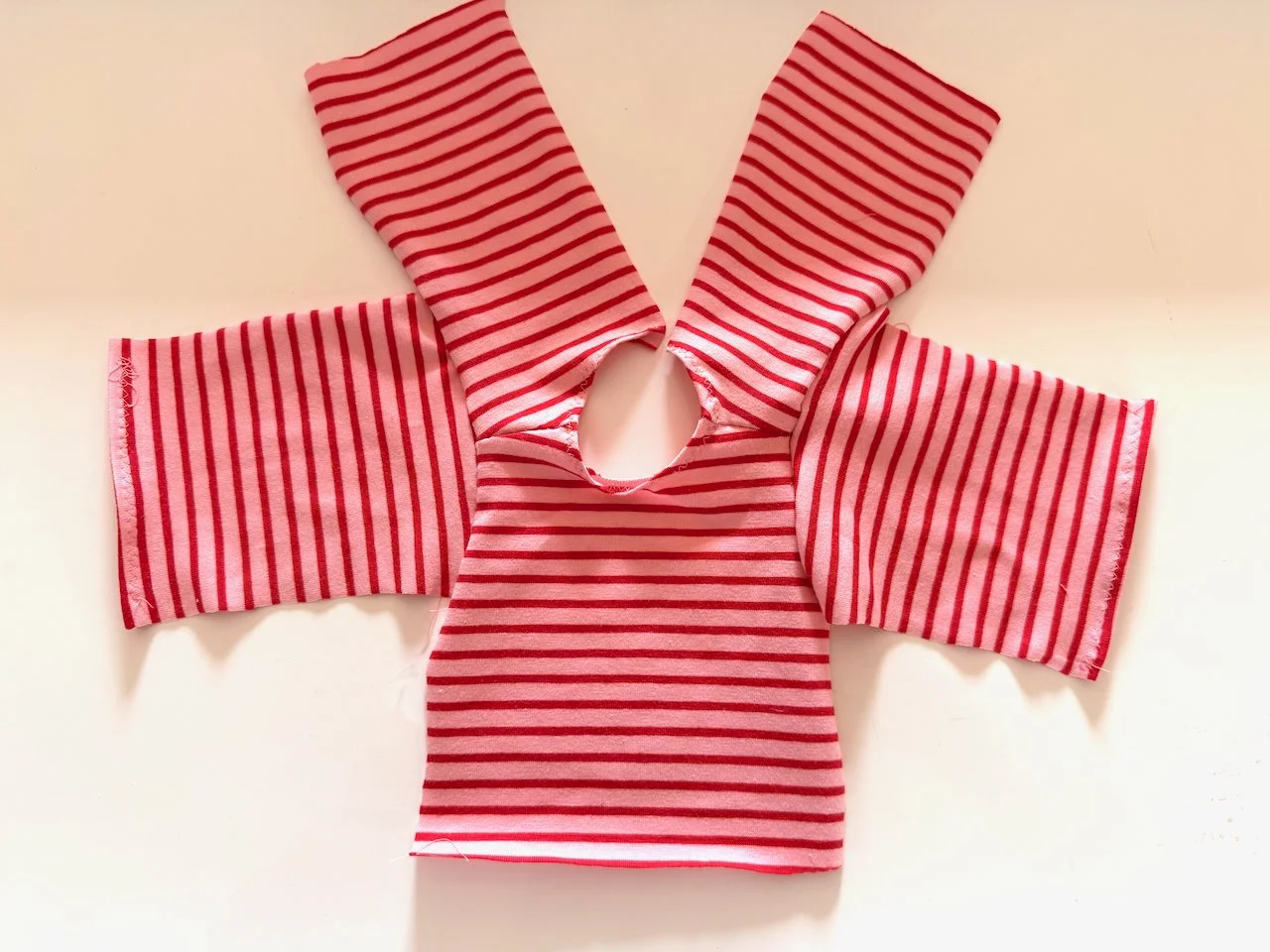
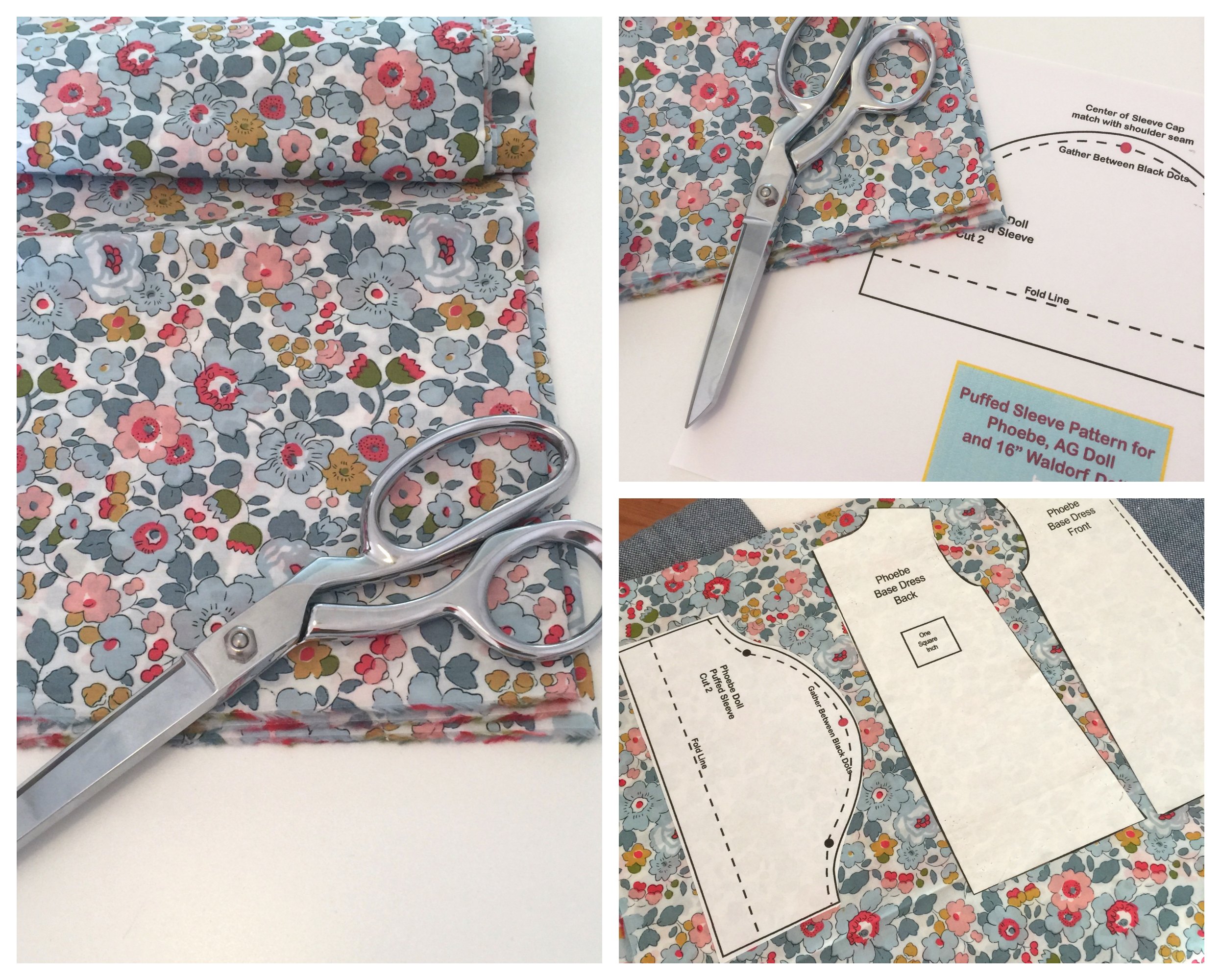
Cut out your five pieces.

Sew the shoulder seams.

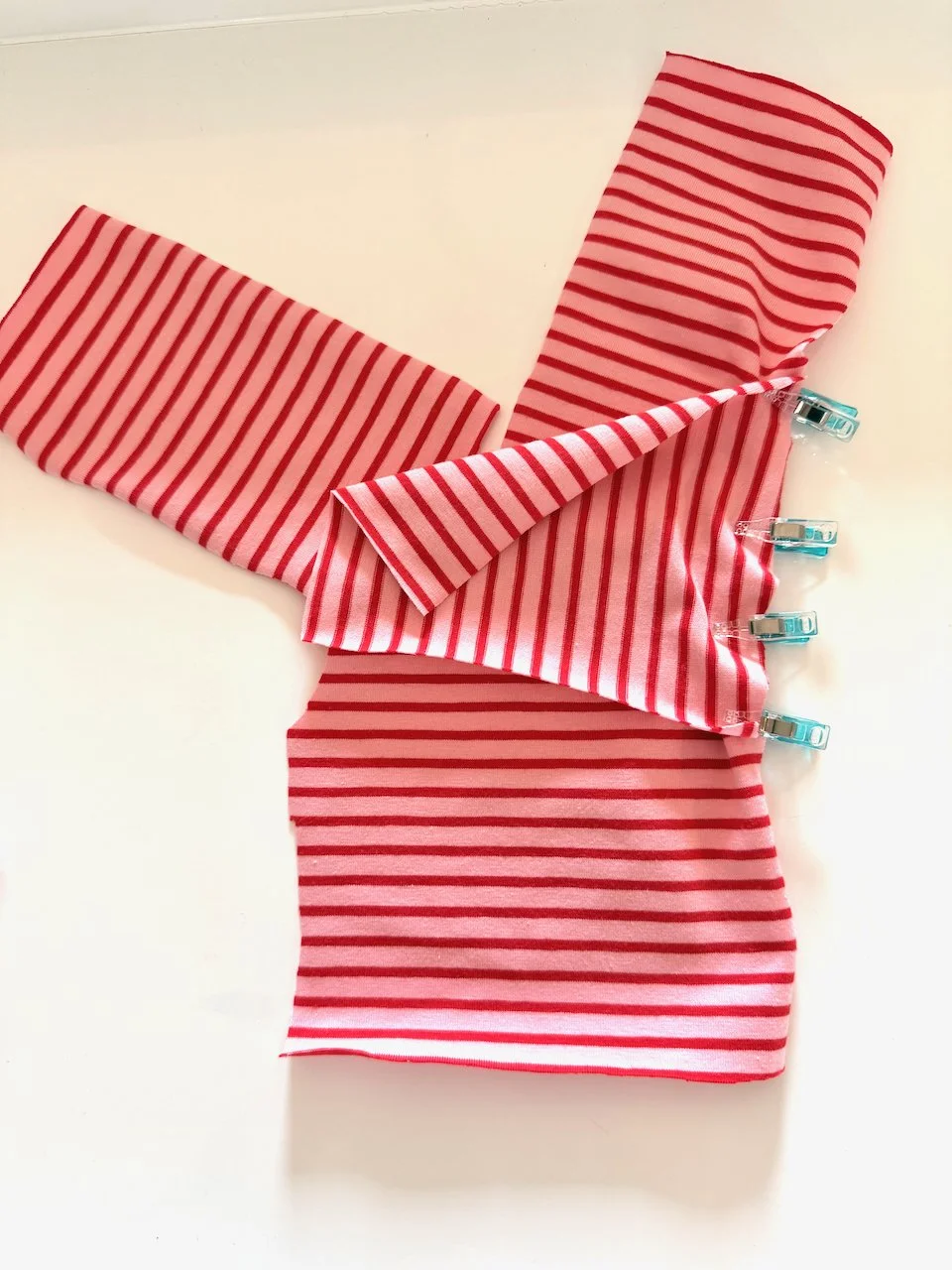
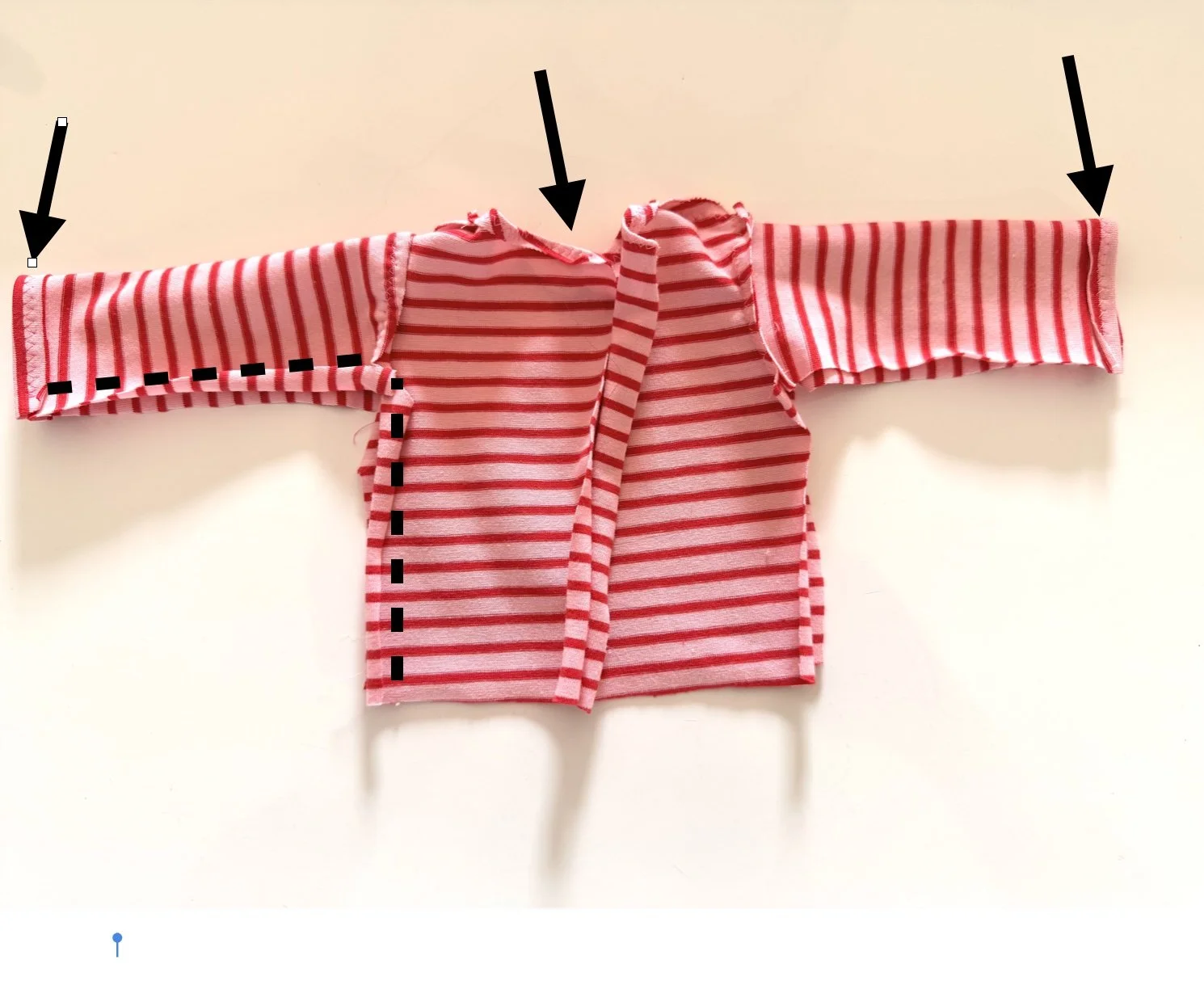
Sew the sleeves in. You may need to stretch the fabric slightly for them toi fit. That’s the beauty of knits, that you can do this to get everything to fit togther.

Hem the neckline and sleeves.

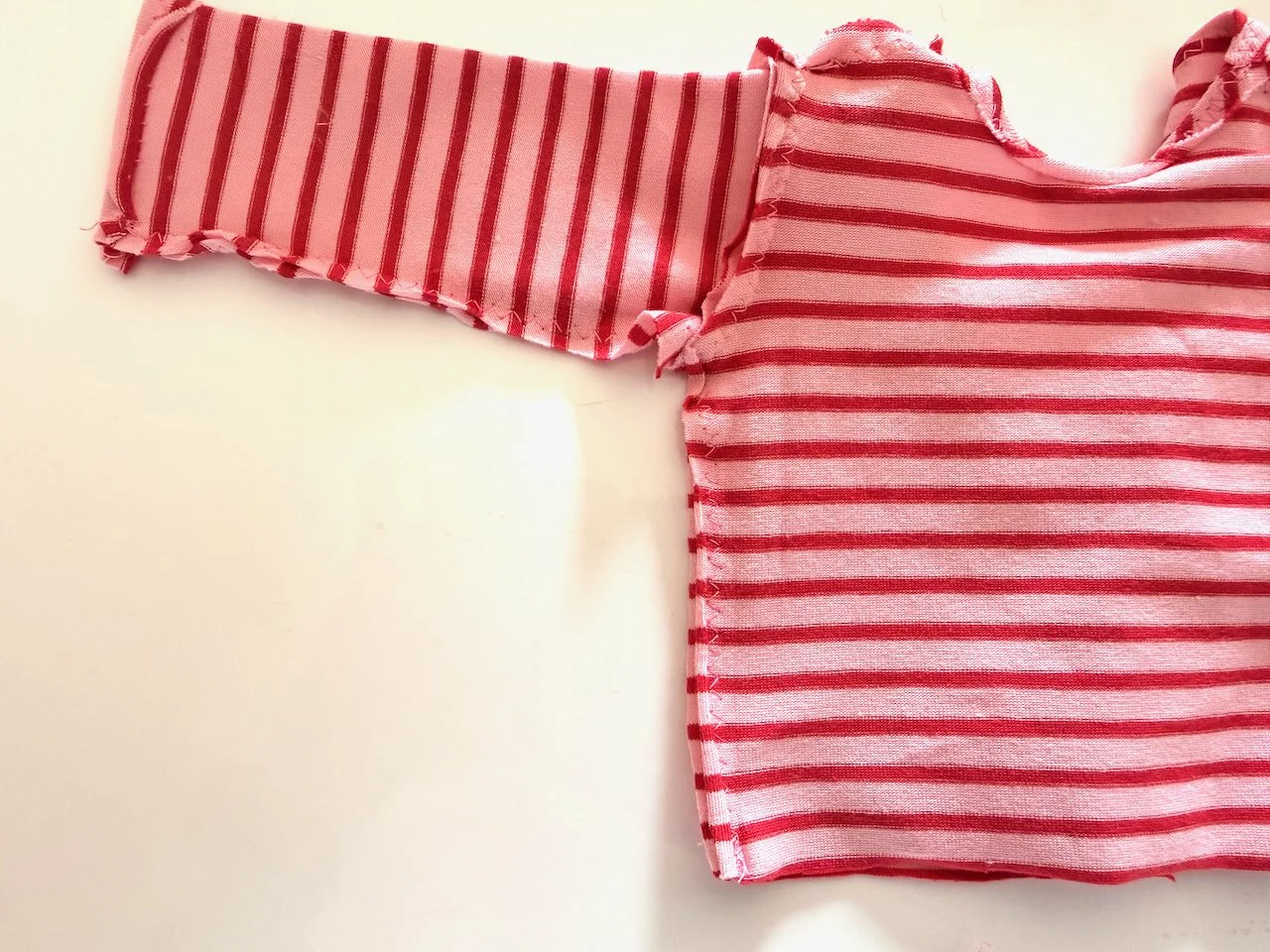
Sew the side seams.

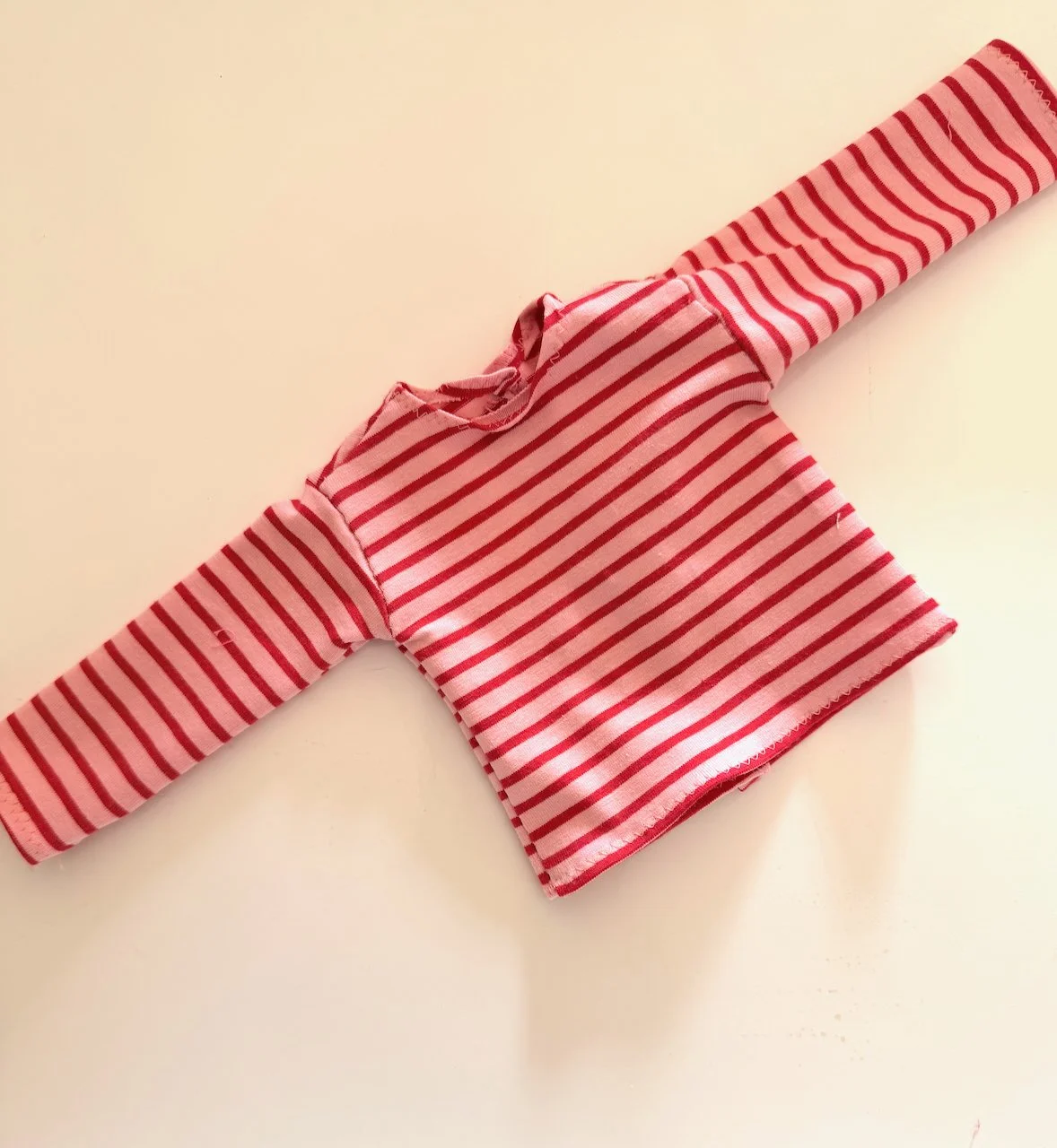
To close the back, I generally use snaps, but velcro is fine, as long as the doll does not have yarn hair.

The Uthando Project: Sewing Dolls for South Africa

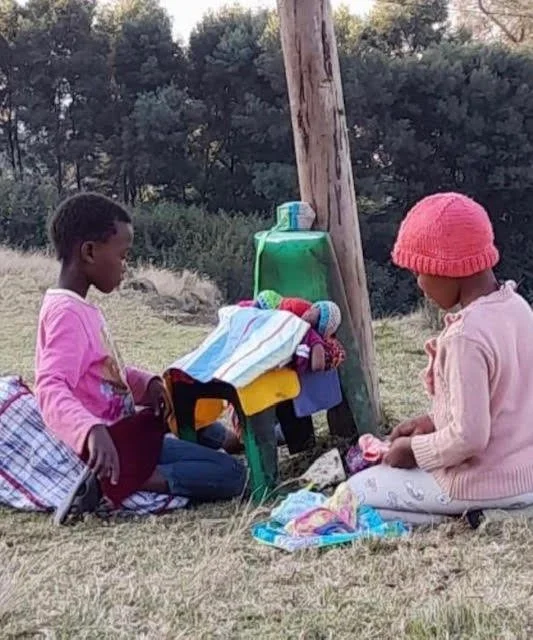
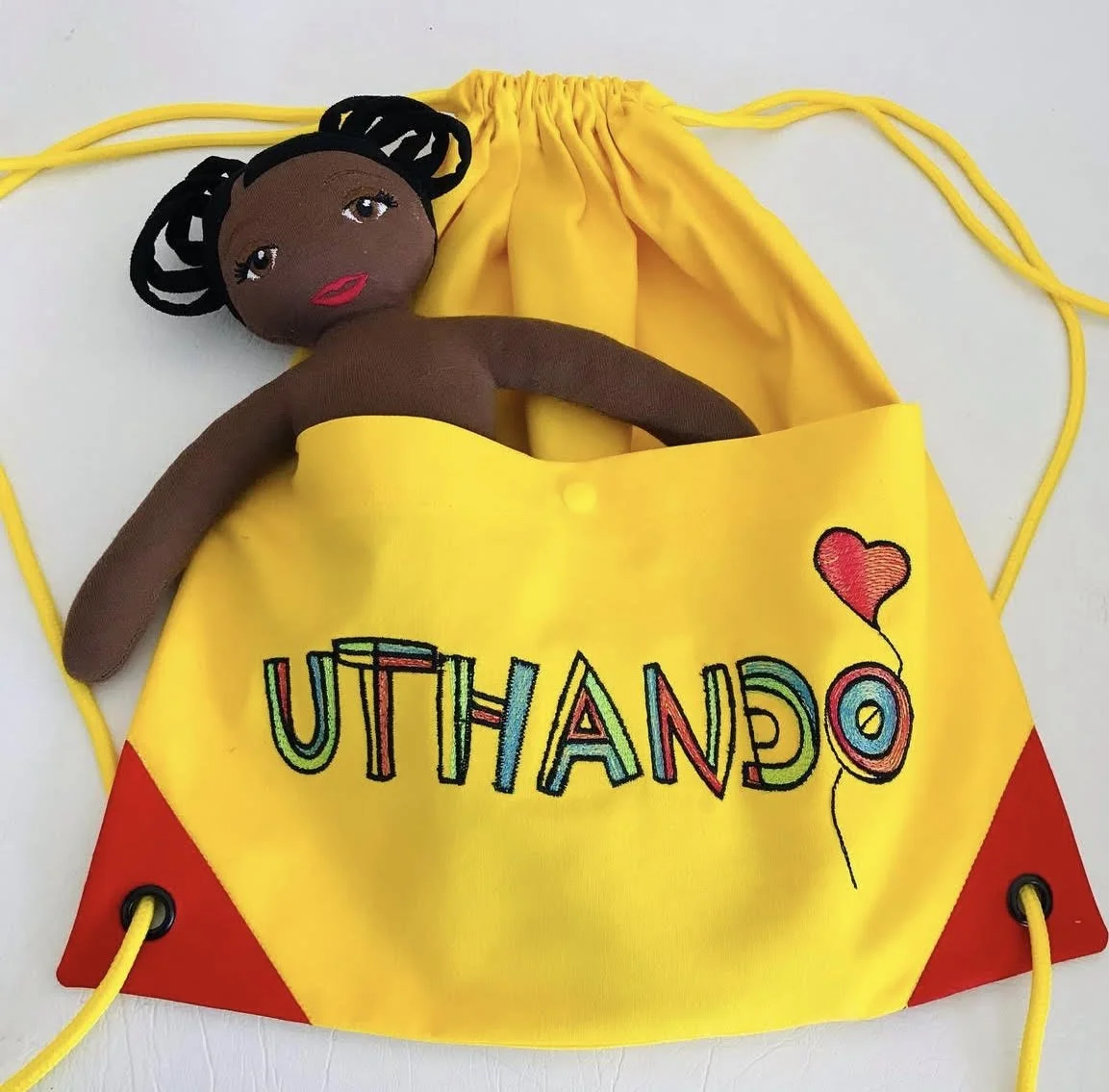
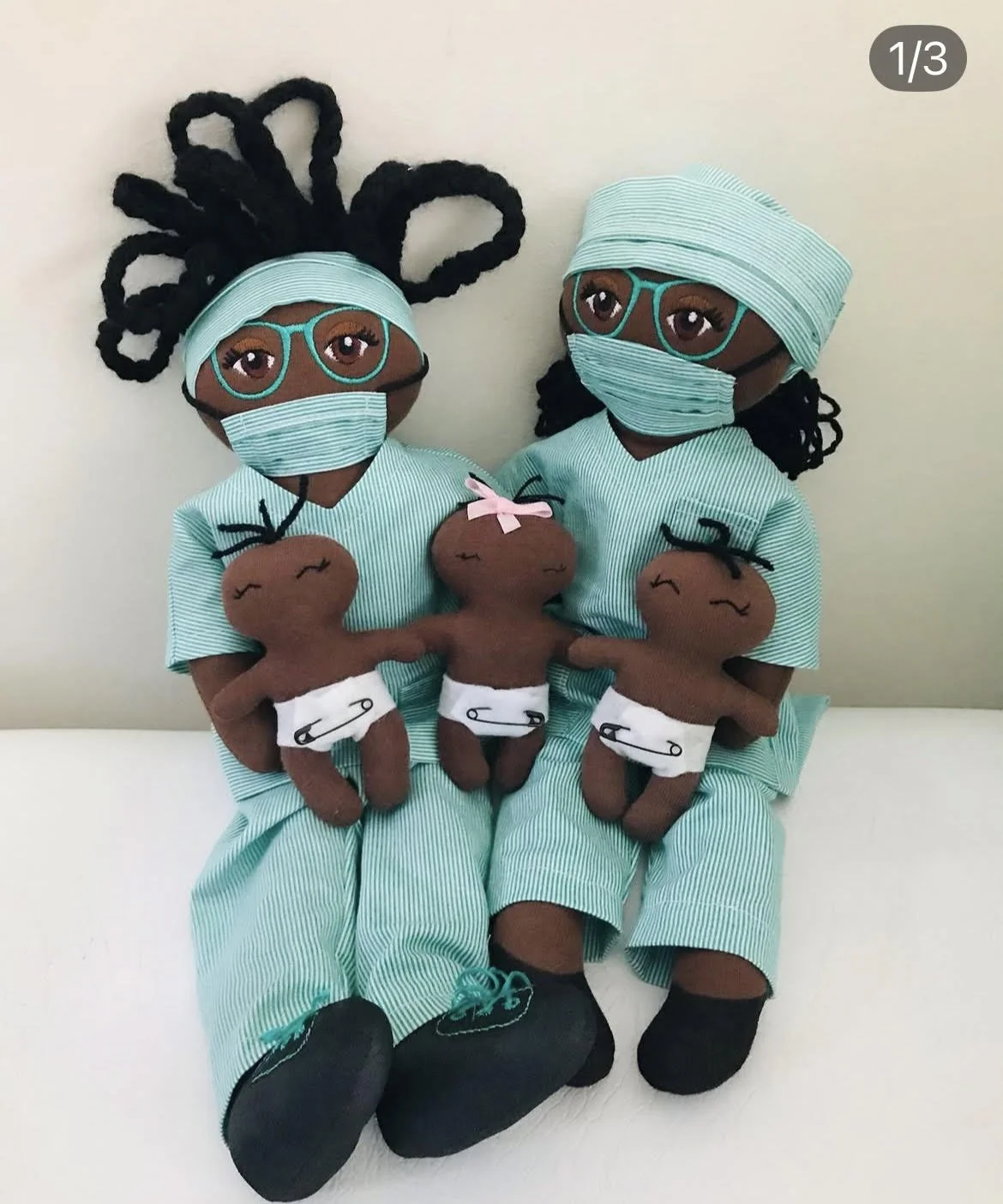
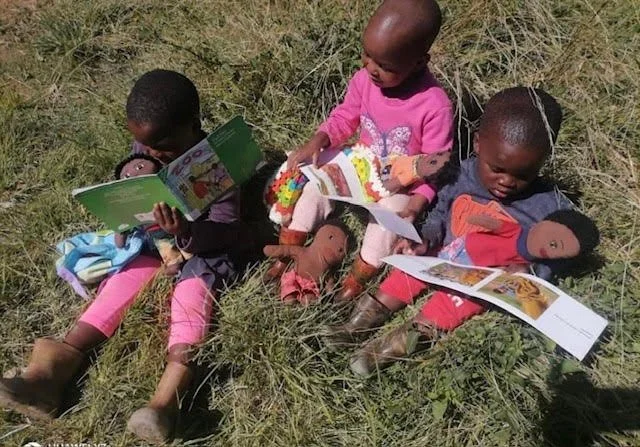
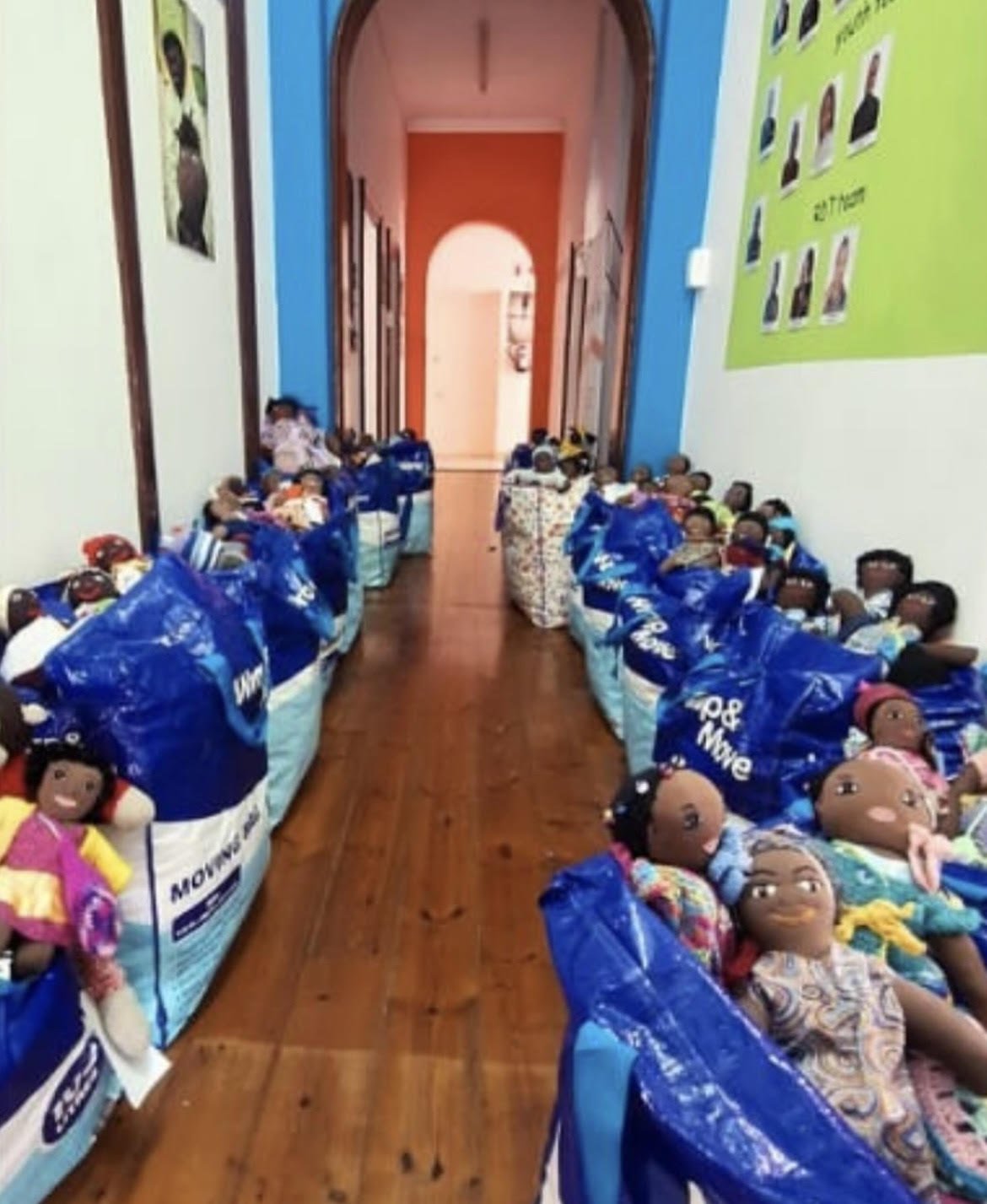
Dolls bring many people great joy. Dolls can also bring the opportunity to spread joy. Aussie doll maker Julie Dodd became involved with the Uthando Project in 2018. The Uthando Project is a Perth-based charity that started 20 years ago.  Uthando is a Zulu word meaning love. The dolls are made by sewers in Australia and donated to children in need in Kwa Zulu Natal, South Africa.

The charity was founded by Julie Stone a child psychologist and early developmental specialist in Kia Zulu Natal.  Julie was working out of a clinic. In the waiting room was one plastic Caucasian doll and every child who visited wanted to take that doll home. When Julie came back to Australia she asked all her friends who could sew, to help her make comforter dolls to gift to her young clients who were suffering from abuse, neglect and malnutrition.

The charity has grown over the years and there are now groups all over Australia. Approximately 5,000 dolls are donated each year, but there are over 11 million children living in poverty in South Africa, so there’s lots of doll making still to be done.

Julie Dodd, a retired fashion technology teacher, became involved in 2018 when she met the chairperson of the Perth branch of the charity. Julie began to enlist sewers from her community in Sydney. Some of the many sewers she has enlisted are featured on her Instagram (link at the end). 

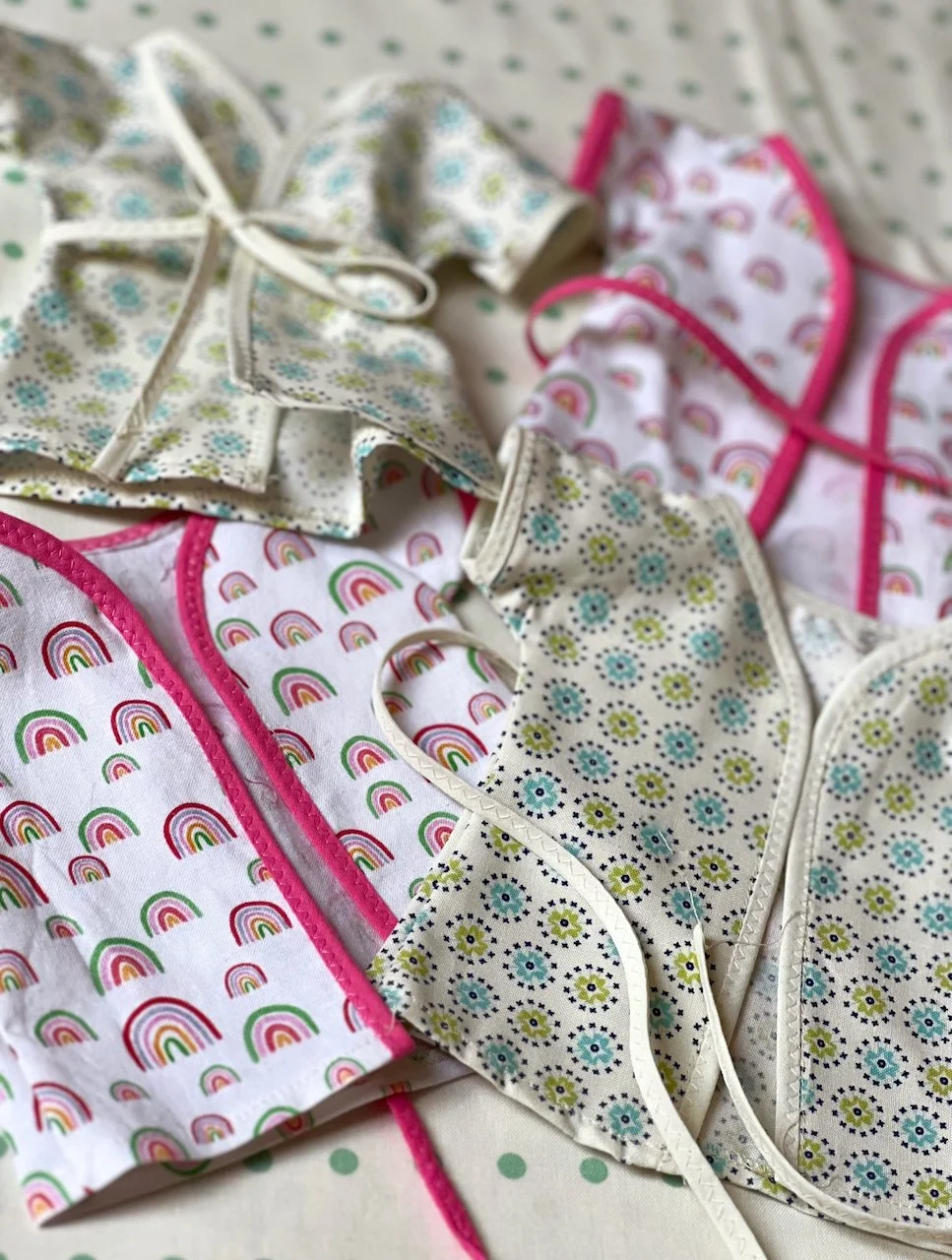
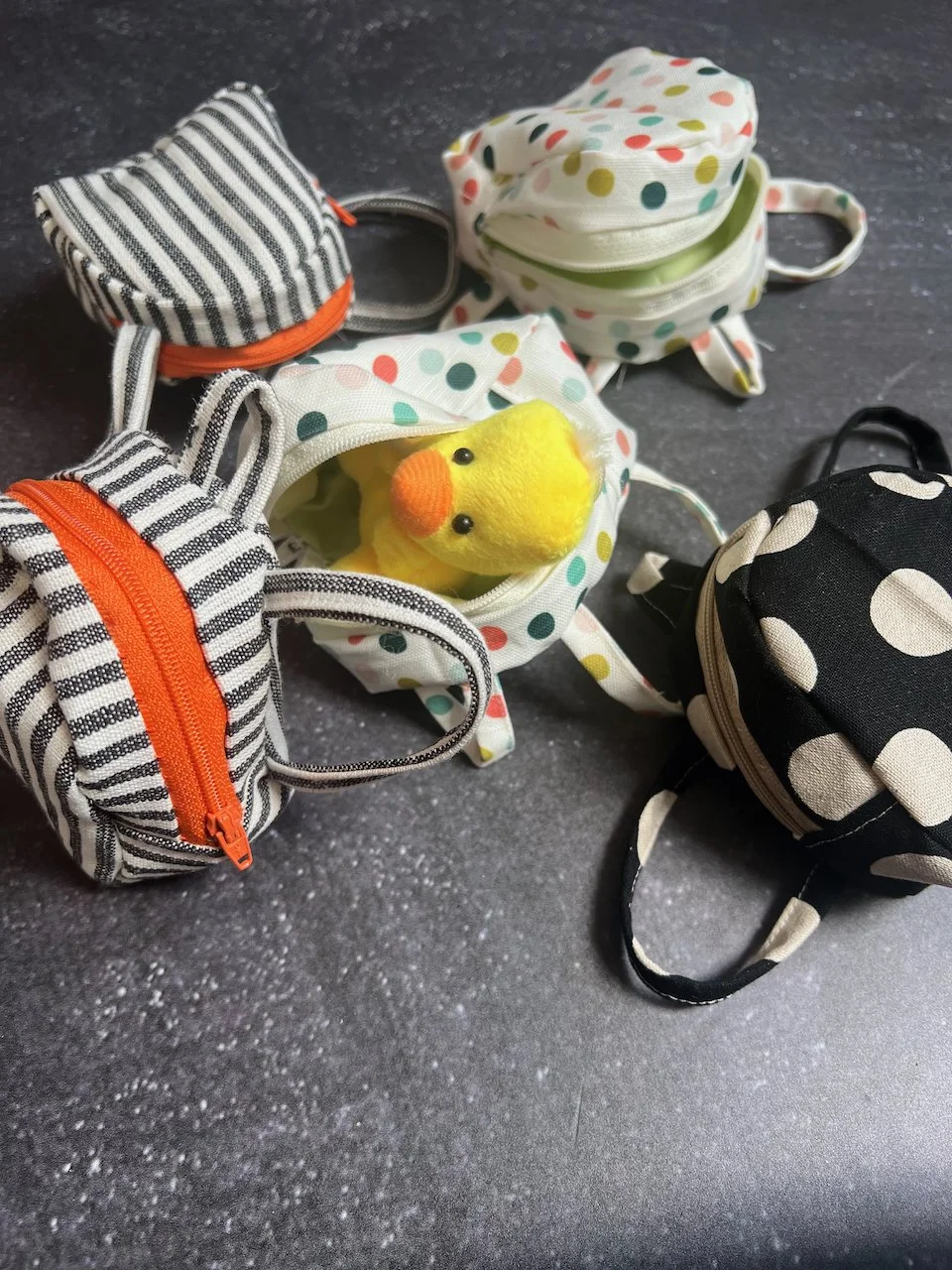
Each doll is donated with a spare change of clothes, some undies, a blanket, a handbag, and a backpack to put all the goodies in. Julie pattern makes the dolls clothes and works with a digitizer to machine embroider the dolls. Some of the garments are made in the hoop of an embroidery machine. 

Dodd says she receives so many inspiring stories and photos from the five organizations who distribute the dolls in South Africa. 

More about the dolls and the organization can be found at the Uthando Project Website. Also for heartwarming inspiration, follow Julie Dodd’s Instagram.


Historical Heroines: Pure Inspiration for Young Girls

The author and her daughter

The author and her daughter

Through each of her books, children’s book author Elizabeth Lorayne seeks to inspire. Her first two books inspired children to think about the flora and fauna of the more remote places on earth. Through her haiku and the adventures of Piratess Tilly, the Galapagos and Easter Island came to life.

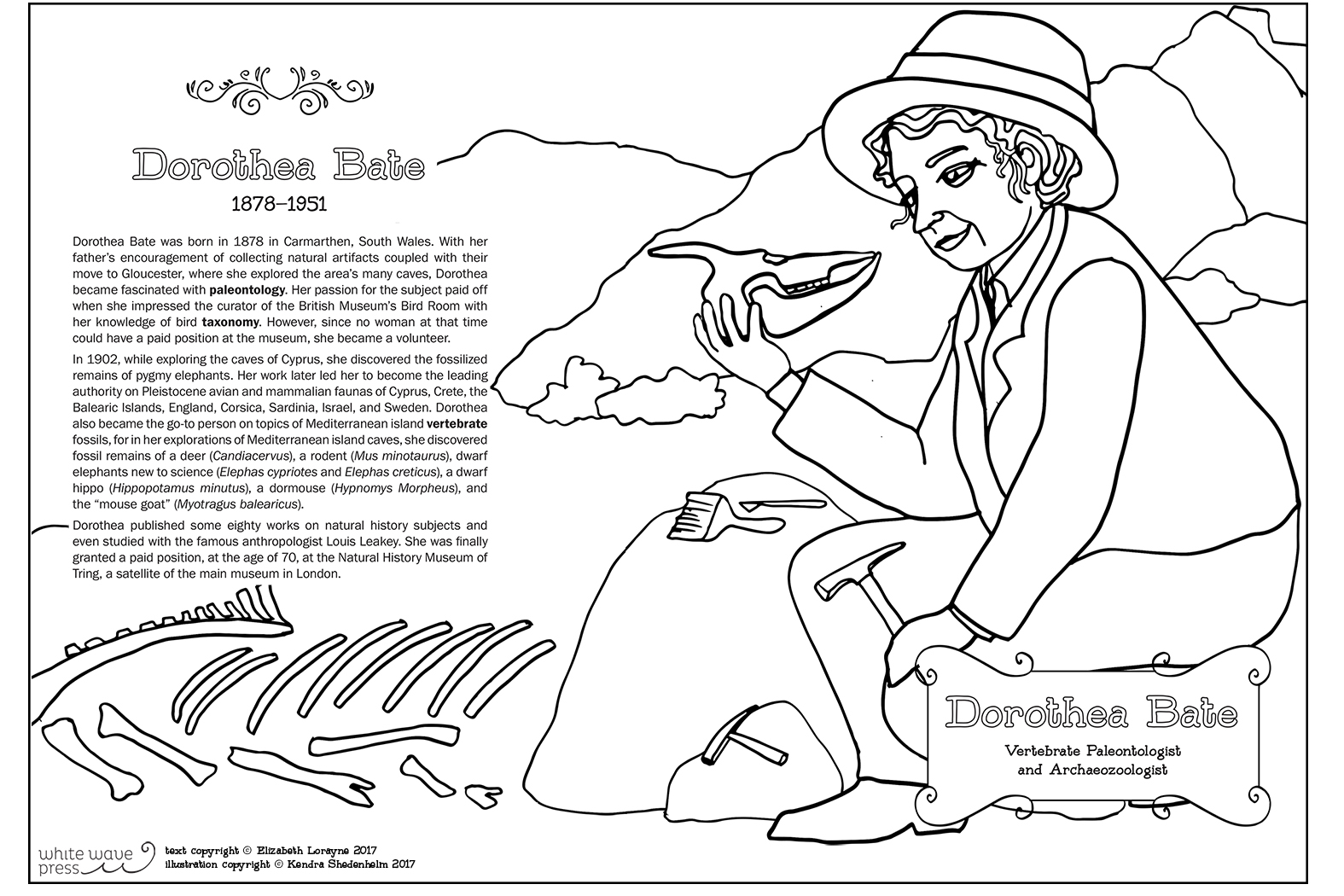
Her latest book, the first in her Historical Heroines series, is also educational, and interactive, but in the old-fashioned sense of interactive. The way children interacted with a book before iPads and Kindles. It’s coloring book of the pioneering women scientists of the 18th and nineteenth century. There were many. Elizabeth covers 30 in the book and then gives a mention to over twenty more in the additional resources.

The book is brilliantly organized. The choice of scientists covers a broad range of science: mathematics, chemistry, botany, astronomy, physics, genetics, naturalism, botanical and scientific illustration, paleontology, geology, entomology, and zoology. Each scientist has a spread, with a coloring page and a brief bio. Key scientific terms in the bio are highlighted and those words are explained in the glossary. 

sample page of Historical Heroine

In addition to a spread, Elizabeth authors additional resources on each heroine for those who want to further explore the discoveries and life of their favorite heroine. 

As Elizabeth learned of these women’s lives, she was keenly aware of the discrimination they fought at every step, beginning with their education and continuing throughout their careers. 

“What’s most remarkable is how hard these women worked to pursue their passion, their dreams, and their talents despite this discrimination. These women scientists were incredible role models, showing us that no matter the obstacles when you persevere, you can achieve anything.” 

Elizabeth worked with illustrator Kendra Shedenhelm and science historian Michael D. Barton to create the coloring book. The book is available in bookstores and on Amazon.

And… there are dolls to go along with the book!

IMG_4578.jpg

“I had worked with Kendra on creating the Piratess Tilly and Yuki dolls so I knew it was possible to take some of her artwork and turn it into a doll.
“For this first doll of Ada Lovelace, I had Kendra extend her dress and make changes to the pattern on her dress a bit. 
“I imagine the scientist pillow-dolls being a fun addition to a tween or even a teens bedroom – something a bit different inspiring, and edgy. How often do you see a brilliant historical woman in science as a pillow, let alone a doll? I included a pocket on the back that has a small card with a bit of information about who Ada Lovelace was.”

The other side of Ada

The other side of Ada